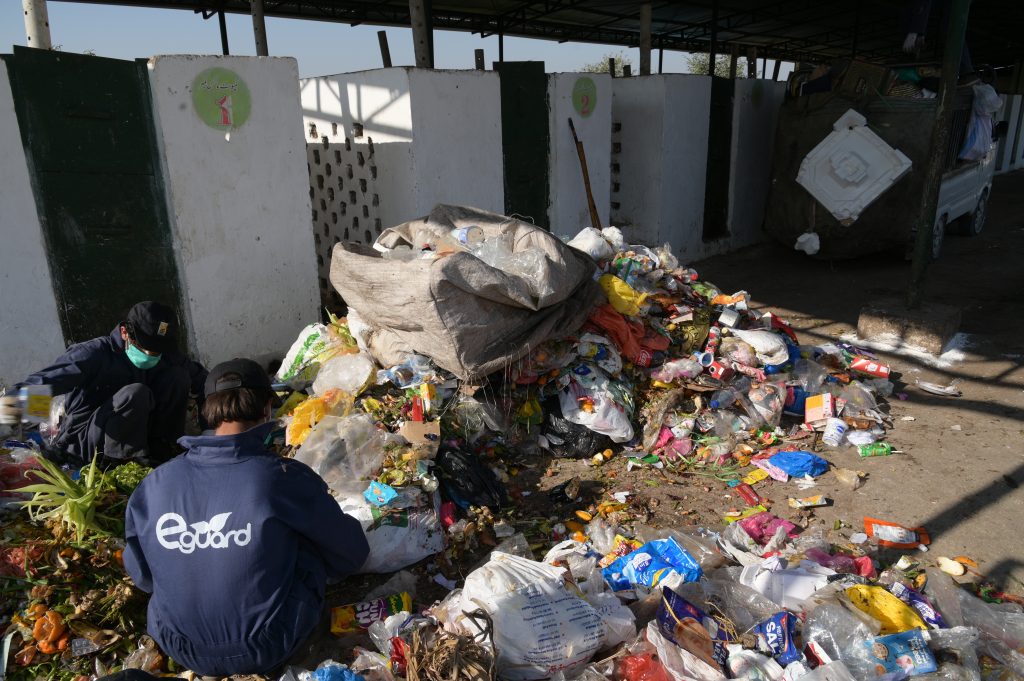

The rapid urbanization and economic development taking place in the Asia-Pacific region is leading to increasing solid waste generation, with an estimated 1.3 billion tons of municipal solid waste generated globally per year and this figure is expected to reach 2.2 billion tons per year in 2025. Managing solid waste is one of the costliest urban services in developing countries, where local governments spend 20 to 50 per cent of their budget on solid waste management. In low-income countries like Pakistan, municipal solid waste management is the single largest budgetary expenditure, with on average 80 per cent being spent on collecting and transporting waste to the dumpsite. Despite the high-spendingon-waste management, cities are finding it increasingly difficult to collect, process and dispose of solid waste in a cost effective and environmentally friendly manner. Open dumping is the most common method for final disposal of waste as it offers a quick and easy solution in the short run. However, this option is not sustainable in the long run as landfills reach capacity resulting from rapid waste generation rates and due to scarcity of land. Finding space for new landfills within municipal boundaries is becoming increasingly difficult. This problem is further compounded by the opposition of local communities to locate new landfills in their vicinity.
Moreover, open dumping causes severe environmental problems. Uncontrolled dumping leads to water and soil contamination, odors, and other health and hygiene problems. In addition to these adverse effects, uncontrolled dumping leads to the anaerobic decomposition of organic materials resulting in the release of methane, a powerful greenhouse gas (GHG), negatively impacting the climate. Improper waste management practices usually result in higher downstream costs than what it would cost to manage the waste properly in the first place.
In order to solve the problem, it is imperative to shift from the conventional end-of-the-pipe waste management system (focused merely on collection and disposal) towards a resource management approach. This approach can be bolstered by establishment Integrated Resource Recovery Centers (IRRCs), which are facilities that enable cities to turn waste into resources through composting, recycling and bio digestion, thereby diverting municipal solid waste from landfills or open dump sites. IRRCs typically processes 80-90% of waste streams, in proximity to the source of generation, and in a decentralized manner. Plants with a capacity to process between 2 and 10 tons of municipal solid waste per day have been established in cities in Cambodia, Sri Lanka and Viet Nam and, now in different areas of Pakistan particularly in Islamabad, Sakrand (Sindh), Mardan (Khyber Pakhtunkhwa) by Dr Akhtar Hameed Khan Memorial Trust.
So far the, the collaboration between AHKMT and CDA/MCI, MOCC, EPA, local government, ICT Administration collaboration has remained at correspondence level and AHKMT is awaiting final approval from them for further process on the project.
The correspondence has been beneficial as AHKMT has found the legal status of the land with the help of ICT administration and local government. The CDA has been written to give clearance for land after which EPA will conduct an IEE study.
In June 2022, Dr. Akhter Hameed Khan Memorial Trust and Engro Foundation launched a pilot project to establish an IRRC in BharaKahu, Islamabad. This initiative is a business model which will be made self-sustainable through generation of revenue and above all will have a positive impact on environmental grounds in the area.
On 19th June, 2022 AHKMT and EngroFoundation reached an agreement that was attended by Engro Foundation Mr. FavadSoomro, Mr.Ahmed Shayan, Ms. Zearma Khan, Mr. Rao Mubeen and Mr. Saad Husain while AHKMT board members Mr. Edwin Samson, Hamid Ullah and CEO Sumaira Gul were present on the occasion. The agreement signing ceremony was held at Engro office, Islamabad. Later, the teams from both organizations visited the site where proposed Integrated Resource Recovery Center will be established.
The project is a physical facility of solid waste management and is aimed at recovering valuable resources from waste. Three major activities will be carried out by the IRRC collection of segregated waste, processing of waste and sale of the resources generated.
The main focus of IRRCs is on organic waste, which typically comes from kitchens, restaurants, and wholesale & fruit Shops. Inorganic waste –mainly paper, packaging materials made of plastic, glass, tin, aluminum, etc. can also be collected and stored on an IRRC, for subsequent sale, when market rates are at its most favorable.
Innovation Facet
A new innovation will be executed at this IRRC that will be built on government land, the IRRC will segregate plastic collected from general waste. And sell it as raw material to industry.
The pilot project in Bhara Kahu has been designed for 300-4,000 households from where daily waste would be collected and transported to the IRRC where it will be reduced and converted into a resource. The kitchen waste will be converted into compost while the recyclable plastic and other items will go to the industry. This facility will sustain itself generating revenue from the sale of compost and getting the monthly fee from households against the waste from door step. AHKMT will make functional and self- sustained the pilot and would handover to relevant department. The project plans to engage all relevant stakeholders to understand the working of this model and replicate it into other parts of the country as well.
The project will not only save government resources (transportation, human resource, land) but will have a positive impact on the environment on a considerable ground which would affect the lives of thousands of dwellers in the area. The project will help stop thousands of tons of waste and plastic especially from reaching the Rawal Lake through its catchment areas that is resulting in environmental and health issues. This initiative will save acres of land from degradation annually where waste is dumped besides saving huge amount of government budget utilized for transportation of waste and purchase of landfill sites.
Since July 1, the pilot project team is actively engaged with stakeholders including Capital Development Authority, Environment Protection Agency, local government, Ministry of Climate Change, district government and others to present the project and get support for the initiative.
Initially AHKMT will construct a five ton daily green waste capacity Integrated Resource Recovery Centre where daily 500-kilogram compost would be produced and daily 1.4-ton plastic would be processed for recycling. The project would comply more technologies to reach level of zero waste and create a replicable low-cost environment friendly SWM model.